

Observatory works with Catalyst Midstream Partners to protect dark skies
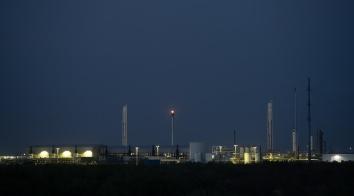
West Texas and the Big Bend are known for their starry night skies, made possible in part by ongoing efforts to preserve them. Recently, McDonald Observatory and the non-profit organization Texan by Nature recognized the efforts of Catalyst Midstream Partners, a joint venture between Howard Energy Partners and Devon Energy Corporation, to reduce light emissions at their County Line processing plant near Orla.
Catalyst and HEP worked alongside McDonald Observatory and Texan by Nature throughout 2021, developing and executing a comprehensive plan to improve lighting practices at the facility. These efforts culminated in a significant, observable reduction in light emissions from the facilities, and the certification of the County Line Processing Plant in May 2022 as Night Sky Friendly under the observatory’s Dark Skies Initiative.
“Consistent with our core values, HEP is always looking for ways to be a good steward of our environment and to give back to the communities where we live and work,” said Jarrell Shircliff, director of operations for HEP.
Most energy industry operations in West Texas operate at all hours, and thus install outdoor lighting for worker safety. Poorly designed outdoor lights, however, spill much of their light into the night sky, and cause blinding glare for workers on the ground. By aiming lights down and shielding them, as well as using an amber light color, light stays where it is useful, and visibility is increased. These practices also eliminate energy waste, and can result in cost savings.
“It’s about a dark sky, not a dark ground,” says Stephen Hummel, Dark Skies Initiative Coordinator at McDonald Observatory. “The solutions to light pollution are simple, but have a positive impact on worker safety, as well as the observatory’s ability conduct research and outreach programs.”
The observatory routinely measures the amount of light pollution detectable from the observatory campus, as well as from other locations across the Greater Big Bend International Dark Sky Reserve. Light pollution from energy sector activity in the Permian Basin peaked in 2018, and declined by an estimated 20% by mid-2021, where it remains today. The reduction in light pollution is in part due to improvements in outdoor lighting practices, as well as reductions in flaring and changes in industry activity. Present levels of light pollution do not impact research at the observatory, but conditions will continue to be monitored.
HEP, as operator of the Catalyst facilities, joins a growing list of energy companies that have adopted McDonald Observatory’s recommended lighting practices for oil and gas operators, such as Apache, Devon Energy, and Diamondback Energy. The recommended practices have been endorsed by the Permian Basin Petroleum Association, the American Petroleum Institute, and others. Facilities that adopt the recommended lighting practices are eligible for the observatory’s Lighting Recognition Program, as well as certification from Texan by Nature.
To learn more about light pollution and the recognition program, visit mcdonaldobservatory.org under “Dark Skies.”
- Log in or Subscribe to post comments.
